The next generation of LRC-TriCEPS
Now available

TriCEPS v.3.0 enables receptor identification for your orphan ligands at the surface of living cells without genetic manipulation. Key features of the new TriCEPS v.3.0 and LRC- TriCEPS technology are:
- Reduction of the number of cells needed:
- TRICEPS v.3.0 LRC experiments require 5-10 fold less starting material for successful receptor identification compared to TRICEPS v.2.0.
- High coverage of the surfaceome.
- A modified LRC workflow enabled by TriCEPS v.3.0 allows for the theoretical identification of up to 85% of all putative cell surface proteins.
- Identification of N-, C-, O- glycosylated targets
More sensitive identification of low copy number cell surface receptors through whole protein pull-down.
Contact form
Please fill out all mandatory (*) fields.
Decoding the extracellular interactome using LRC-TriCEPS
Ligand-receptor capture
The LRC-TriCEPS technology was invented by Andreas Frei and Bernd Wollscheid from ETH Zurich who published the technology in Nature Biotechnology Nature Biotechnology (Frei et al.(2012) Nature Biotechnology 30:997-1001) and further developed it to HATRIC-LRC (Sobotzki et al. Nature Communications, volume 9, Article number: 1519 (2018) doi:10.1038/s41467-018-03936-z)
Orphan ligands:
- Extracellular proteins
- Peptide ligands
- Antibodies
- Viruses
- Engineered affinity binders
Dualsystems Biotech AG is a biotech company providing analytic services for protein-protein interactions.
If you are looking for the targets of your ligand – peptide, protein, antibody, and virus – that are relevant in the living organism, call us on +41 44 738 50 00 or fill in the form on the right hand. We will contact you to see how LRC-TriCEPS technology (ligand-receptor capture) can answer your questions.
LRC-TriCEPS is a novel approach enabling the identification of cell surface receptors and off-targets on living cells for a wide range of orphan ligands. Advantages of LRC-TriCEPS compared to other approaches:
- No genetic manipulation
- No hypothesis needed
- Targets are embedded in plasma membrane in their natural microenvironment
- Cells are alive during interaction
Availability
The TriCEPS-based ligand-receptor capture technology is now available at Dualsystems.
LRC-TriCEPS is a novel approach enabling the identification of cell surface receptors and off-targets on living cells for a wide range of orphan ligands, such as:
- Peptides
- Protein
- Antibodies
- Engineered affinity binders
- Viruses
Availability
The TriCEPS-based ligand-receptor capture technology is now available.
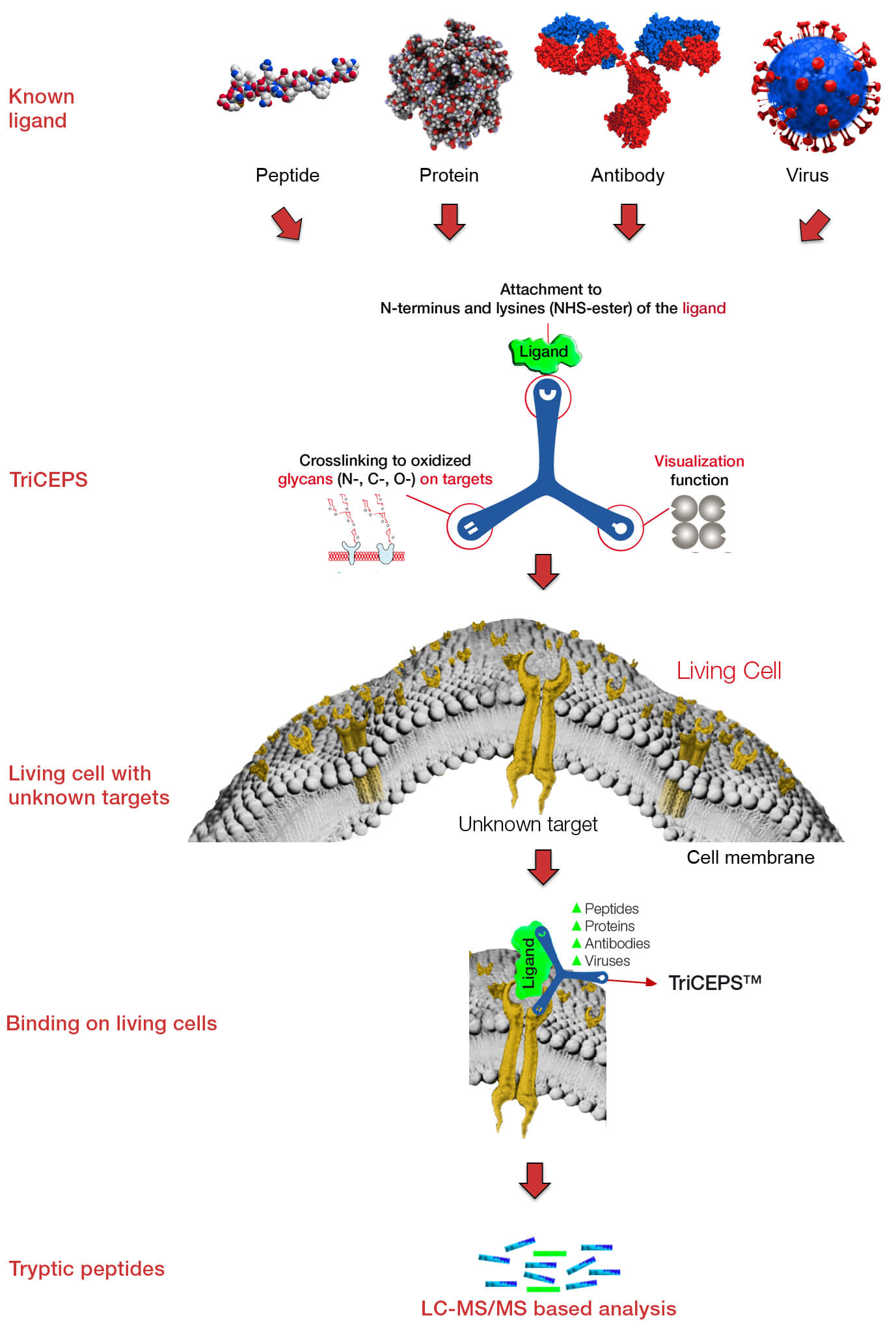
Principle of LRC-TriCEPS
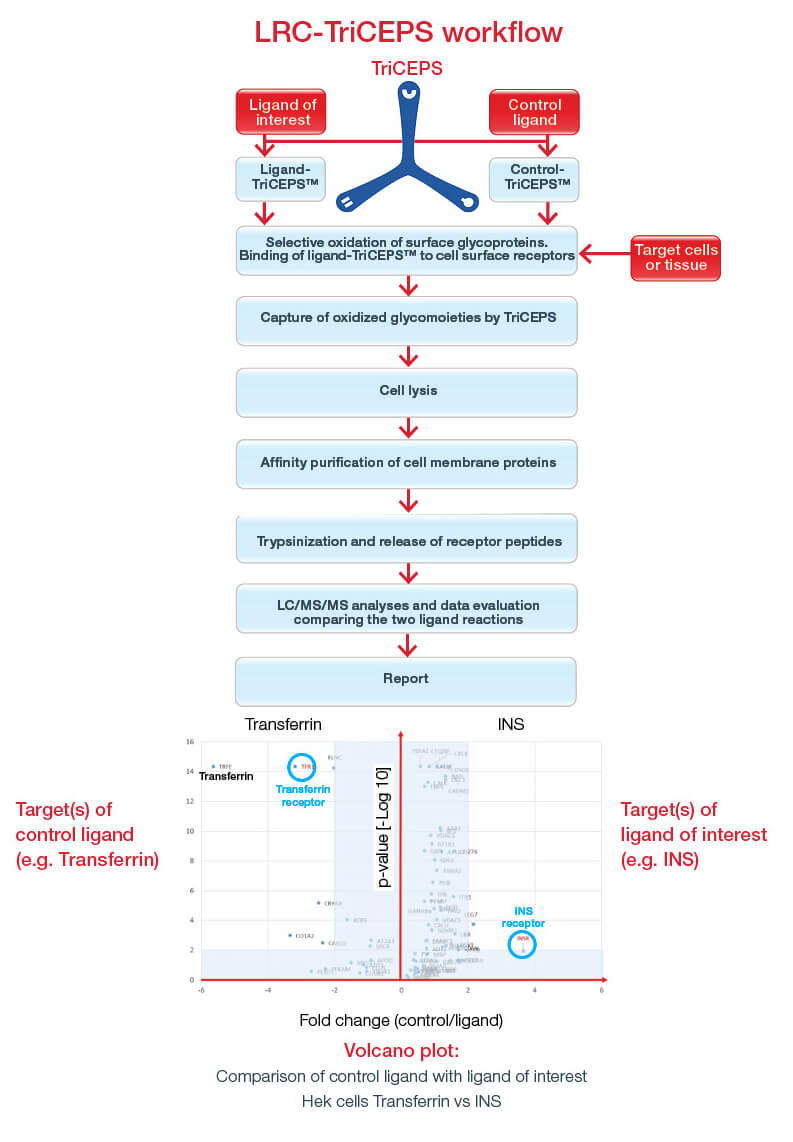
LRC-TriCEPS is a fast and sensitive approach to discover cell surface N-, C-, and O-glycosylated receptors for a ligand of interest.
- Label ligand with the TriCEPS chemoproteomic reagent
- Activate target cells or native tissue to oxidize cell surface glycans
- Incubate ligand-TriCEPS complex with activated cells
- TriCEPS immediately links ligand and cognate receptor(s)
- Isolate all membrane proteins with the support of TriCEPS
- Tryptic digest of all membrane proteins
- Identification of peptides by mass spectrometry
- Analysis of data using statistics and bioinformatics
LRC-TriCEPS – a trifunctional chemoproteomics reagent
TriCEPS structure:
- NHS-ester for attachment to the ligand
- Protected hydrazine function for capturing the interacting receptor
- Pull out function for purification of ligand-receptor peptides
Requirements
Requirements for one LRC experiment: Ligand in triplicate compared to control in triplicate
- 300 µg ligand containing a free amino group
- 60 Mio cells or 50 µm tissue slice
The LRC-TriCEPS platform
enables the identification of protein targets at the cell surface of living cells of ligands such as peptides, proteins, and viruses.
Why is the LRC-TriCEPS platform the best way to identify surface protein interactions or do screenings for peptides, antibodies, or other biologics?
The experiment is done on living cells, without the need to genetically modify the cells or have a hypothesis about the likely target. It can be applied to any mammalian cell type (primary cells or cell lines). During the interaction of your ligand of interest (peptide, protein, virus, or similar) with its unknown target, the cells are alive and can be brought into the desired state (e.g., activated T-cells or differentiated cells), providing a more accurate reflection of what will later occur in the human body, specifically in patients.
Targets and Off-targets, Mode of Action studies for biologics screening or protein interaction mapping
With the LRC-TriCEPS platform, cell surface protein targets and off-targets of biologics (peptides, proteins, antibodies, antibody-drug conjugates (ADC), virus-like particles (VLPs), viruses, protein-containing vesicles, etc.) can be identified. This helps to understand the mode of action (MoA) of biologics and supports the selection of the best biologics candidate by identifying off-targets and comparing several drug candidates in one experiment.
By using different cell types representing various organs of the human body, the LRC-TriCEPS platform can also test whether different biologics drug candidates bind to different proteins on the cell surface of different cell types.
Novel Drug Targets to Broaden Your Drug Pipeline and Find New Ways to Treat Diseases
The LRC-TriCEPS platform is useful for identifying unknown protein-ligand interactions at the cell surface to discover novel drug targets and modes of action by pinpointing endogenous protein interactions. Understanding which proteins are involved at the cell surface is key to discovering novel drug targets.
Case Studies
Immune Oncology Novel Drug Target Discovery
- Challenge: What is the target of the checkpoint inhibitor Vista?
- Background: Vista is a receptor expressed on cancer cells that inhibits activated T-cells from recognizing and killing cancer cells. The LRC-TriCEPS experiment used the extracellular domain of Vista fused with an Fc-tag as the ligand to identify the target on activated T-cells from different donors. At physiological pH 7.4, no target could be identified, but at acidic pH 6.0, PSGL-1 was discovered as the target. The acidic dependency of this interaction was confirmed using different techniques. This experiment mimicked the acidic tumor environment in patients, leading to the identification of a novel drug target.
- Take-home message:
- Novel drug target PSGL-1 identified using the LRC-TriCEPS platform.
- The microenvironment is essential for receptor-ligand interactions.
- Receptor discoveries can best be studied on living cells for a more accurate reflection of patient responses.
- Link to publication: Vista Interaction with PSGL-1 Published in Nature
Novel Drug Target for Asthma Treatment
- Challenge: What proteins are targeted at the cell surface by house dust mite, leading to allergic reactions?
- Background: Researchers at the University of Central Florida wanted to understand how house dust mite induces allergies that may lead to asthma. A house dust mite protein extract was used as a ligand in an LRC-TriCEPS experiment on dendritic cells, identifying LMAN1 as the target. The group confirmed that LMAN1 is downregulated in asthmatic patients and could potentially be used as a novel drug target.
- Take-home message:
- The LRC-TriCEPS platform can identify targets of complex protein or peptide mixtures on the surface of living cells.
- Link to publication: Identification of a Receptor for House Dust Mite Allergens
Mode of Action of a Cytokine Inhibitor (TIMP-1)
- Challenge: What is the mode of action of the cytokine inhibitor TIMP-1?
- Background: TIMP-1 plays a role in inflammatory diseases and cancer, but its interaction with immune cells was unclear. The LRC-TriCEPS platform identified a novel target on the surface of a monocyte cell line, showing that TIMP-1 triggers monocyte activation, a key mechanism in diseases like cancer, sepsis, and acute pancreatitis.
- Take-home message:
- The LRC-TriCEPS platform identified a novel mechanism of action by revealing that TIMP-1 activates monocytes, a crucial factor in inflammatory diseases.
Link to publication: TIMP-1 is a Novel Ligand of Amyloid Precursor Protein and Triggers a flammatory Phenotype in Human Monocytes
Cardiac-Specific Peptide Targeting
- Challenge: How does a cardiac-specific peptide enter cardiac cells?
- Background: Before the LRC-TriCEPS screen, there was no hypothesis regarding the target or how the peptide entered cardiac cells. The screen revealed that a voltage-gated potassium channel was the entry point for the 12-amino acid peptide.
- Take-home message:
- The target of a peptide or protein screen may not always be a receptor; in this case, it was a channel.
- Link to publication: Cardiac Targeting Peptide: A Novel Cardiac Vector Studies in Bio-Distribution, Imaging Application, and Mechanism of Transduction
Customers Testimonials – LRC-TriCEPS Service
Testimonials from our customers who have used the LRC-TriCEPS technology – in collaboration with Dualsystems Biotech AG.
Helmholtz Munich
We used the LRC-TriCEPS technology from Dualsystems to identify interacting proteins for a tumor-secreted factor on the surface of differentiated myotubes. The main interaction partner identified through the LRC-TriCEPS workflow could be confirmed using independent experimental methods. This discovery proved pivotal for elucidating the underlying mechanism of action responsible for the phenotypic effects we had observed and facilitated further development toward specific therapeutic targeting.
We highly appreciated the professional and dedicated support provided by the Dualsystems team throughout the project, which contributed to the smooth and successful execution of the study.
Dr. Mauricio Berriel Diaz
Deputy Director &
Head of Division Metabolism and Cancer
Institute for Diabetes and Cancer (IDC)

www.helmholtz-munich.de
We highly appreciated the professional and dedicated support provided by the Dualsystems team throughout the project, which contributed to the smooth and successful execution of the study.
Dr. Mauricio Berriel Diaz
Deputy Director &
Head of Division Metabolism and Cancer
Institute for Diabetes and Cancer (IDC)
www.helmholtz-munich.de
2026-03-10T15:59:33+00:00
https://www.dualsystems.com/testimonials/helmholtz-munich/
University Hospital of Lausanne (CHUV)
We collaborated with DualSystems Biotech AG to perform LRC-TriCEPS experiments aimed at identifying cellular factors involved in Zika virus infection. The entire process—from initial discussions through to data delivery—was carried out with exceptional professionalism and scientific rigor.
Thanks to their LRC-TriCEPS platform, we were able to identify a cellular factor playing a major role in Zika virus entry. This unique method was applied to living cells without the need for genetic modification. In our case, the method worked robustly across three different cell types. Notably, it enabled the identification of an unexpected target at the cell surface that would likely have been missed by standard screening approaches, as the protein lacks a classical membrane anchor. What impressed us most was that the implication of this target, discovered via their screening, was subsequently confirmed in our in vitro studies using different cellular models.
We greatly appreciated the collaboration with the DualSystems Biotech AG team. Their expertise, responsiveness, and willingness to support our project at every stage were key to its success. The data provided were of high quality and well presented, facilitating downstream interpretation and validation.
Milos Stojanov, PhD - Head of the Materno-fetal and Obstetrics Research Unit - University Hospital of Lausanne (CH)

Miloš Stojanov, PhD | Senior Lecturer (MER1)
Head of the Materno-fetal and Obstetrics Research Unit
Department Woman-mother-child (DFME)
1011 Lausanne
Tél: +41 21 314 05 17
Thanks to their LRC-TriCEPS platform, we were able to identify a cellular factor playing a major role in Zika virus entry. This unique method was applied to living cells without the need for genetic modification. In our case, the method worked robustly across three different cell types. Notably, it enabled the identification of an unexpected target at the cell surface that would likely have been missed by standard screening approaches, as the protein lacks a classical membrane anchor. What impressed us most was that the implication of this target, discovered via their screening, was subsequently confirmed in our in vitro studies using different cellular models.
We greatly appreciated the collaboration with the DualSystems Biotech AG team. Their expertise, responsiveness, and willingness to support our project at every stage were key to its success. The data provided were of high quality and well presented, facilitating downstream interpretation and validation.
Milos Stojanov, PhD - Head of the Materno-fetal and Obstetrics Research Unit - University Hospital of Lausanne (CH)
Miloš Stojanov, PhD | Senior Lecturer (MER1)
Head of the Materno-fetal and Obstetrics Research Unit
Department Woman-mother-child (DFME)
1011 Lausanne
Tél: +41 21 314 05 17
2025-04-04T12:42:13+00:00
https://www.dualsystems.com/testimonials/university-hospital-of-lausanne-chuv/
OncoLille Cancer Institute
We aim to identify the ligand of a receptor, but due to the low affinity of the interaction other approaches that have been tried failed. Paul Helbling and the DualSystem team provided a great support and critical insights for performing the ligand identification using the LCR-TriCEPS technology. We found now a candidate ligand that we are currently validating with promising results. DualSystem team has been really professional and of great support in this process and we plan to work again with them in the future.

Best,
Silvia Gaggero, PhD
Mitra Lab, Inserm
OncoLille Cancer Institute
Lille, France
Best,
Silvia Gaggero, PhD
Mitra Lab, Inserm
OncoLille Cancer Institute
Lille, France
2024-06-06T12:25:14+00:00
https://www.dualsystems.com/testimonials/oncolille-cancer-institute/
AstraZeneca
We needed to identify the target of an antibody from a phenotypic screening approach using a difficult iPSC-derived cell line and reached-out to DualSystems and their LRC-TriCEPS technology after an earlier attempt at target deconvolution using an array of membrane targets had failed. The support I got from Paul Helbling and his team was great and as someone who was unfamiliar with the approach, I really appreciated the advice and guidance that I got. At the end of the process the top candidate from the analysis was confirmed as the target of the antibody – a brilliant result! Overall, a really positive experience and I would definitely recommend DualSystems.

James Dodgson
AstraZeneca
Cambridge, UK.
James Dodgson
AstraZeneca
Cambridge, UK.
2023-05-24T20:08:08+00:00
https://www.dualsystems.com/testimonials/astrazeneca/
UCF College of Medicine
“DualSystems LRC-TriCEPS platform helped us in the identification of a novel allergen receptor. This finding was central to our recently published work and funded grant! DualSystems was very helpful during the entire process, if you are considering using this platform, do not hesitate. The process is straightforward and the support is excellent!”

Justine Tigno-Aranjuez, Ph.D.
Assistant Professor of Medicine
UCF College of Medicine
Justine Tigno-Aranjuez, Ph.D.
Assistant Professor of Medicine
UCF College of Medicine
2023-03-16T06:40:12+00:00
https://www.dualsystems.com/testimonials/ucf-college-of-medicine/
Cohbar
DualSystems' LRC-TriCEPS platform was exactly what we needed to identify potential targets and guide us in mechanism of action studies for our peptide program. They helped us every step of the way -- from understanding their capabilities, to guiding study design, and supporting sample preparation. The report they delivered exceeded our expectations and truly stands out from data reports we've received from other companies. They were readily available to answer questions and discuss concerns or outcomes. We are very encouraged by the results and are currently following up on the targets identified. We highly recommend working with DualSystems and incorporating the LRC-TriCEPS platform into your program. We look forward to working with the DualSystems team again in the future.

Dr. Lindsay Stark
Drug Discovery Scientist at CohBar
Dr. Lindsay Stark
Drug Discovery Scientist at CohBar
2023-01-18T08:14:48+00:00
https://www.dualsystems.com/testimonials/cohbar/
Technical University of Munich
Technical University of Munich – Institute of Experimental Oncology and Therapy Research
Using LRC-TriCEPS, we aimed to identify novel direct cell surface receptors of our ligand of interest.
At any time, we experienced great support of Dualsystems Biotech. They kindly helped to find optimal conditions for our purposes and provided help with any kind of question before, during and after the experiment. LRC-TriCEPS allowed us to identify novel cell surface receptors of our ligand, which we could successfully validate in different cell types and with different biochemical assays. We can fully recommend Dualsystems Biotech and are looking forward to perform further analyses using LRC-TriCEPS.

Prof. Dr. rer. nat. Achim Krüger
Institute of Experimental Oncology and Therapy Research
Klinikum rechts der Isar, Technical University of Munich
Using LRC-TriCEPS, we aimed to identify novel direct cell surface receptors of our ligand of interest.
At any time, we experienced great support of Dualsystems Biotech. They kindly helped to find optimal conditions for our purposes and provided help with any kind of question before, during and after the experiment. LRC-TriCEPS allowed us to identify novel cell surface receptors of our ligand, which we could successfully validate in different cell types and with different biochemical assays. We can fully recommend Dualsystems Biotech and are looking forward to perform further analyses using LRC-TriCEPS.
Prof. Dr. rer. nat. Achim Krüger
Institute of Experimental Oncology and Therapy Research
Klinikum rechts der Isar, Technical University of Munich
2022-07-27T14:23:02+00:00
https://www.dualsystems.com/testimonials/technical-university-of-munich/
University of Miyazaki
We appreciate the support of Dualsystems Biotech and their LRC-TriCEPS technology we were able to identify a binding protein for our insulinotropic peptide

Hideyuki Sakoda, MD, PhD
Associate professor
Department of Biological Sciences, Faculty of Medicine, University of Miyazaki, Japan.
Hideyuki Sakoda, MD, PhD
Associate professor
Department of Biological Sciences, Faculty of Medicine, University of Miyazaki, Japan.
2022-04-19T11:45:22+00:00
https://www.dualsystems.com/testimonials/university-of-miyazaki/
Lund University Diabetes Centre
We wanted to use LRC-TriCEPS to characterise the mechanism of action of our ligand of interest. Not only were several candidate targets identified but we have successfully validated two of these receptors in insulin producing beta cells. DualSystems Biotech were very helpful and involved from study design, to experiments and reporting. Even after the initial report, DualSystems Biotech have answered follow up queries and provided assistance regarding publications. I highly recommend the LRC-TriCEPS technology and DualSystems Biotech and Paul Helbling and his team to work with.

Dr. Claire L. Lyons,
Associate Researcher
Unit of Medical Protein Science
Lund University Diabetes Centre
Sweden
Dr. Claire L. Lyons,
Associate Researcher
Unit of Medical Protein Science
Lund University Diabetes Centre
Sweden
2021-10-25T05:58:59+00:00
https://www.dualsystems.com/testimonials/lund-university-diabetes-centre/
Australian National University
“We had a challenging project where we aimed to discover the receptor of our ligand of interest in primary human cells. Dualsystems Biotech took the challenge and provided outstanding support throughout the entire process, from the experimental design to data analysis. Using their LRC-TriCEPS technology, we could identify a candidate receptor and additional downstream interacting partners that we have now validated. We look forward to new collaborations and discoveries with Dr Paul Helbling and his team”. – Prof Carola Vinuesa, ANU

The Australian National University
Co-Director, Centre for Personalised Immunology, NHMRC Centre of Research Excellence
College of Health & Medicine
The Australian National University
The Australian National University
Co-Director, Centre for Personalised Immunology, NHMRC Centre of Research Excellence
College of Health & Medicine
The Australian National University
2021-01-11T08:16:02+00:00
https://www.dualsystems.com/testimonials/australian-national-university/
Harvard Medical School, Brigham and Women’s Hospital
We used DualSystems to help identify a potential novel receptor for a ligand that despite being studied for decades had unclear catabolism mechanisms involving its receptor mediated uptake. The DualSystems team will walk you through the process, including early validation of your ligand being used for this technology, data collection and analysis, and provide an easy to follow report on the findings. For anyone interested in receptor-ligand interactions, DualSystems and the TriCEPS approach is worth strongly considering involving in your research program, as it can quickly help identify receptors that would have been very difficult to do so without.


Maximillian Rogers, PhD
Research Scientist
Harvard Medical School, Brigham and Women's Hospital
Department of Medicine, Cardiovascular Division
Boston, MA
Maximillian Rogers, PhD
Research Scientist
Harvard Medical School, Brigham and Women's Hospital
Department of Medicine, Cardiovascular Division
Boston, MA
2020-11-09T13:27:52+00:00
https://www.dualsystems.com/testimonials/harvard-medical-school-brigham-and-womens-hospital/
Center for Biomolecular & Cellular Structure, Institute for Basic Science
“It was my great pleasure to collaborate with Dualsystems Biotech. We have been tested various proteomic analysis to identify the specific receptor for our secreted ligand. But, only LRC-TriCEPS experiment successfully gave us a right answer, because this receptor and ligand interactions were indeed relatively weaker than other general receptor and ligand interactions. The team very kindly consulted the whole experimental steps from the experimental design to the final data analysis. We are now going to use TriCEPS again for several other secreted ligands with a great hope for discovery of new receptors. Best Regards, Ho Min Kim”


Associate Professor
Graduate School of Medical Science and Engineering, KAIST
Chief Investigator
Center for Biomolecular & Cellular Structure, Institute for Basic Science (IBS)
Associate Professor
Graduate School of Medical Science and Engineering, KAIST
Chief Investigator
Center for Biomolecular & Cellular Structure, Institute for Basic Science (IBS)
2020-08-12T13:02:47+00:00
https://www.dualsystems.com/testimonials/center-for-biomolecular-cellular-structure-institute-for-basic-science/
Department of Internal Medicine Erasmus MC
We were fortunate to partner with Dualsystems Biotech AG to discover cell-surface targets for the short-peptide ligand we had been working on for several years. We decided to try the LRC-TriCEPS approach to identify cell-surface binding partners for the ligand after several earlier aborted attempts using different techniques. Using LRC-TriCEPS we have identified targets that we have now been able to verify functionally and biochemically using other methods. It was a pleasure to work with Dr Paul Helbling and his team who were extremely helpful guiding us through the experimental process and assisting with analysis of the data. We were impressed by the quality of the data and the ease with which we were able to run the study.
 Dr Patric Delhanty
Laboratory of Metabolism and Reproduction
Department of Internal Medicine
Erasmus MC
Rotterdam, The Netherlands
Dr Patric DelhantyLaboratory of Metabolism and Reproduction
Department of Internal Medicine
Erasmus MC
Rotterdam, The Netherlands
2020-04-28T11:54:52+00:00
https://www.dualsystems.com/testimonials/department-of-internal-medicine-erasmus-mc/
Seoul National University
"I have used many binding assays and was in the verge of giving up. Then I have contacted Dr. Paul Helbling and his group. The LRC-TriCEPS experiment was effective and let us go over the obstacle we had during the project. We look forward to using TriCEPS in the future".

Chung Hwan Cho, Ph. D. candidate
Environmental Health Microbiology Laboratory
Department of Environmental Public Health
Seoul National University
Chung Hwan Cho, Ph. D. candidate
Environmental Health Microbiology Laboratory
Department of Environmental Public Health
Seoul National University
2020-01-29T14:05:52+00:00
https://www.dualsystems.com/testimonials/seoul-national-university/
The University of Oklahoma – Health Sciences Center
I was very pleased with my collaboration with the team at Dualsystems. We had to work with difficult cells and the team helped us develop modifications to the original protocol to be able to use the TriCEPS approach with our cells. The whole team was very responsive, involved, and knowledgeable and this led to a successful identification of a receptor for our ligand of interest. We have since then confirmed the interaction and we are now getting ready to publish this study, which will have implications in the treatment of ocular injuries.

Anne Kasus-Jacobi, PhD
Associate Professor of Research
University of Oklahoma Health Sciences Center
Department of Pharmaceutical Sciences
Oklahoma City, Oklahoma, USA
Anne Kasus-Jacobi, PhD
Associate Professor of Research
University of Oklahoma Health Sciences Center
Department of Pharmaceutical Sciences
Oklahoma City, Oklahoma, USA
2019-07-02T04:38:05+00:00
https://www.dualsystems.com/testimonials/the-university-of-oklahoma-health-sciences-center/
CuroNZ Ltd
The team from DualSystems Biotech AG has been extremely helpful in delivering scientific advice for CuroNZ’s target identification journey. The quick turnaround time and the precision of NRP2945’s target identification in regard to the utilization of their TRICEPS technology impressed us very much. Meanwhile we could identify another NRP2945 receptor target that was identified by DualSystems as being recruited to the NRP2945-activated membrane receptor complex. An absolute pleasure to work with Paul Helbling’s team.

Frank Sieg, PhD
CSO
CuroNZ Ltd
Mangawhai in New Zealand
Frank Sieg, PhD
CSO
CuroNZ Ltd
Mangawhai in New Zealand
2019-02-20T12:18:04+00:00
https://www.dualsystems.com/testimonials/curonz-ltd/
University of Pittsburgh
It was a pleasure working with Paul Helbling and his team. I was impressed by their attention to detail, and optimization of all cell conditions to produce the most reliable possible results. They kept me informed at every stage of the process and shared data as soon as they were able to. Using their LRC-TriCEPS platform, we were able to follow leading candidates as binding partners for our cardiac targeting peptide and identified the most likely binding partner.

Maliha Zahid, M.D., Ph.D.
Assistant Professor
Departement of Developmental Biology
University of Pittsburgh
Maliha Zahid, M.D., Ph.D.
Assistant Professor
Departement of Developmental Biology
University of Pittsburgh
2018-11-15T19:35:14+00:00
https://www.dualsystems.com/testimonials/university-of-pittsburgh/
University of Oklahoma Health Sciences Center
I was very pleased with my collaboration with the team at Dualsystems. We had to work with difficult cells and the team helped our lab develop modifications to the original protocol to be able to use the TriCEPS approach with our cells. The whole team was very responsive, involved, and knowledgeable and this led to a successful identification of a receptor for our ligand of interest. We have since then confirmed this interaction and we are now getting ready to publish this study, which will have implications in the treatment of ocular injuries.
Anne Kasus-Jacobi, PhD
Assistant Professor of Research
University of Oklahoma Health Sciences Center
Department of Pharmaceutical Sciences
Oklahoma City, Oklahoma, USA
Anne Kasus-Jacobi, PhD
Assistant Professor of Research
University of Oklahoma Health Sciences Center
Department of Pharmaceutical Sciences
Oklahoma City, Oklahoma, USA
2018-04-23T11:45:16+00:00
https://www.dualsystems.com/testimonials/lrc-triceps/
Biomedical Research Institute
PUBLICATION: Li Z, Zeppa JJ, Hancock MA, McCormick JK, Doherty TM, Hendy GN, and Madrenas J. Staphylococcal Superantigens Use LAMA2 as a Coreceptor To Activate T Cells. J Immunol. 2018; 200: 1471-1479.
The identification of a T cell co-receptor for staphylococcal superantigens had been challenging due to the structural features of the interaction and its kinetics. However, working with Dualstystems Biotech AG, and with Dr. Paul Helbling in particular, and using the LRC-TriCEPS technology, we were able to identify a candidate that was subsequently corroborated by biochemical and functional assays. We are very happy with this collaboration , and sincerely recommend it for the identification of novel receptor or co-receptor candidates. (Quim) Madrenas, MD, PhD, FCAHS
Chief Scientific Officer
Los Angeles Biomedical Research Institute at Harbor-UCLA Medical Center
Torrance, USA
The identification of a T cell co-receptor for staphylococcal superantigens had been challenging due to the structural features of the interaction and its kinetics. However, working with Dualstystems Biotech AG, and with Dr. Paul Helbling in particular, and using the LRC-TriCEPS technology, we were able to identify a candidate that was subsequently corroborated by biochemical and functional assays. We are very happy with this collaboration , and sincerely recommend it for the identification of novel receptor or co-receptor candidates.
(Quim) Madrenas, MD, PhD, FCAHSChief Scientific Officer
Los Angeles Biomedical Research Institute at Harbor-UCLA Medical Center
Torrance, USA
2018-04-19T11:18:18+00:00
https://www.dualsystems.com/testimonials/lrc-triceps-service-8/
QIMR Berghofer Medical Research Institute
“With the help of the team at Dualsystems we confirmed a potential receptor which has lead to a Nature paper submission and successful funding of a research grant. The LRC-TriCEPS experiment was straightforward and the process was cost effective. We look forward to using TriCEPS in the future.” Anita Burgess | PhD
Hepatic Fibrosis Group
QIMR Berghofer Medical Research Institute, Australia
 Anita Burgess | PhD
Hepatic Fibrosis Group
QIMR Berghofer Medical Research Institute, Australia
2017-12-12T13:21:33+00:00
https://www.dualsystems.com/testimonials/lrc-triceps-service-7/
University of Miami, Miller School of Medicine
We are very pleased with the experience and interaction on very high professional level with Dualsystems Biotech. As a result of such collaboration the new receptor MUC5B was identified in human chondrosarcoma cells for the first time for antiproliferative neuropeptide PRP-1. Read more
I would like to thank once again the company and, particularly, Dr Helbling for his attention and collaboration.
 Dr Karina Galoian
Research associate professor
University of Miami, Miller School of Medicine
Department of Orthopedic surgery
Miami, Florida, USA
I would like to thank once again the company and, particularly, Dr Helbling for his attention and collaboration.
 Dr Karina Galoian
Research associate professor
University of Miami, Miller School of Medicine
Department of Orthopedic surgery
Miami, Florida, USA
2017-11-16T08:07:04+00:00
https://www.dualsystems.com/testimonials/lrc-triceps-service-6/
Münster University Hospital (UKM)
"Dualsystems Biotech’s approach to receptor identification with the TriCEPS reagent gave us a powerful platform with great support for a successful and fast data generation, when conventional approaches had previously failed." Dr. rer. nat. Martin Herold
Working group from Prof. Dr. med. Luisa Klotz
Münster University Hospital (UKM), Germany
Dr. rer. nat. Martin HeroldWorking group from Prof. Dr. med. Luisa Klotz
Münster University Hospital (UKM), Germany
2017-08-24T14:48:20+00:00
https://www.dualsystems.com/testimonials/lrc-triceps-service-5/
University of Manitoba
"Every aspect of our experience with Dualsystems Biotech was outstanding. They provided excellent customer service and technical support throughout the entire process. Their LRC-TriCEPS technology allowed us to identify several new candidate receptors for our protein of interest in rat primary neurons, and this has created new and exciting avenues for our research."
 Sari S. Hannila, PhD
Associate Professor, Department of Human Anatomy and Cell Science
Associate Member, Spinal Cord Research Centre
Max Rady College of Medicine, Rady Faculty of Health Sciences
University of Manitoba
 Sari S. Hannila, PhD
Associate Professor, Department of Human Anatomy and Cell Science
Associate Member, Spinal Cord Research Centre
Max Rady College of Medicine, Rady Faculty of Health Sciences
University of Manitoba
2017-06-12T10:05:43+00:00
https://www.dualsystems.com/testimonials/lrc-service/
The Rockefeller University
"We are very pleased with the work product of Dualsystems Biotech. The TriCEPS reagent allowed us to identify a novel ligand-extracellular matrix protein receptor interaction, which was not possible using traditional techniques. The Dualsystems team were very helpful in tailoring the experimental conditions to fit our biological question." Manish Ponda, M.D., M.S.
Assistant Professor of Clinical Investigation
The Rockefeller University
 Manish Ponda, M.D., M.S.
Assistant Professor of Clinical Investigation
The Rockefeller University
2016-10-10T14:21:51+00:00
https://www.dualsystems.com/testimonials/lrc-triceps-service-3/
Medizinische Hochschule Hannover
“With the support of Dualsystems Biotech and their LRC-TriCEPS technology we were able to identify receptor candidates for our peptide with renoprotective properties in kidney injury.”
 Dr. rer. nat. Inga Sörensen-Zender
Postdoc
Medizinische Hochschule Hannover
Dr. rer. nat. Inga Sörensen-ZenderPostdoc
Medizinische Hochschule Hannover
2016-09-26T10:26:51+00:00
https://www.dualsystems.com/testimonials/lrc-triceps-service-2/
East Tennessee State University
“For the ligand sample two unique receptors were identified. Flow cytometry analysis with siRNA induced knockdown of these proteins confirmed that the presence of the protein is needed for CTRP3 binding to occur. CONCLUSION The LRC-TriCEPS methodology was successful in identifying the receptor for CTRP3.” Jonathan M Peterson
Assistant Professor
East Tennessee State University
Jonathan M PetersonAssistant Professor
East Tennessee State University
2016-05-30T15:20:03+00:00
https://www.dualsystems.com/testimonials/lrc-triceps-service/
Igenica Biotherapeutics
«Leveraging Dualsystems Biotech novel linker technology (LRC-TriCEPS) and its analytical data processing capabilities we were able to identify the heterophilic receptor for a highly-pursued immuno-oncology target.» Dr. Edward van der Horst,
Senior Director, Preclinical Development
Igenica Biotherapeutics
Dr. Edward van der Horst,Senior Director, Preclinical Development
Igenica Biotherapeutics
2016-05-09T11:13:08+00:00
https://www.dualsystems.com/testimonials/lrc-triceps-service-4/
Centro de Estudos de Doenças Crónicas
New publication in Nature Communications using the LRC-TriCEPS technology in collaboration with Alisson Gontijo
« The fruitful collaboration with Dualsystems Biotech using the LRC-TriCEPS (CaptiRec) technology showed that even on insect cells receptors could be identified »
 Alisson M. Gontijo,
Principal Investigator at CEDOC
Centro de Estudos de Doenças Crónicas
« The fruitful collaboration with Dualsystems Biotech using the LRC-TriCEPS (CaptiRec) technology showed that even on insect cells receptors could be identified »
Alisson M. Gontijo,Principal Investigator at CEDOC
Centro de Estudos de Doenças Crónicas
2015-02-24T07:32:40+00:00
https://www.dualsystems.com/testimonials/captirec-service-3/
Washington University School of Medicine
"Thanks to LRC-TriCEPS (CaptiRec) technology we were able to identify a long sought receptor of our ligand using genetically-engineered cell lines with the support of Dualsystems". Fumihiko Urano, MD, PhD
Samuel E. Schechter Professor of Medicine
Washington University School of Medicine
Fumihiko Urano, MD, PhDSamuel E. Schechter Professor of Medicine
Washington University School of Medicine
2015-02-17T14:30:12+00:00
https://www.dualsystems.com/testimonials/captirec-service-2/
University of California San Francisco
"We have been trying to identify a receptor that has been sought after for nearly 30 years by laboratories across the globe. Thanks to Dualsystems service CaptiRec (LRC-TriCEPS), we now have a strong candidate receptor."  De'Broski R. Herbert Ph.D.
Assistant Professor in Residence
University of California San Francisco (UCSF)
De'Broski R. Herbert Ph.D.Assistant Professor in Residence
University of California San Francisco (UCSF)
2015-02-17T14:27:53+00:00
https://www.dualsystems.com/testimonials/captirec-service/
LRC-TriCEPS customers worldwide
Over 200 satisfied customers from 28 countries.
We identify targets / off-targets of your ligand
If you want to get support for your project
LRC-TriCEPS / HATRIC-LRC Publications
Concerning the LRC-TriCEPS or HATRIC-LRC platforms.
Footer
Social Media

